How to Create Professional Bills and Invoices for Your Tailoring Business
Learn how to create professional bills and invoices for your tailoring shop. Improve customer trust, ensure GST compliance, and streamline your billing process with these practical tips.
Introduction
When a customer picks up their finished garment, what do you hand them? A hand-written slip with the amount? A torn receipt from a carbon book? Or do you hand them a clean, professional invoice that lists every item, shows the price breakdown, and includes your shop's name and contact details?
The way you bill your customers says a lot about your business. A professional invoice builds trust, prevents disputes, and makes your shop look established and reliable. It also keeps your financial records organized for tax purposes, especially if you are GST-registered.
Yet many tailoring shops still rely on handwritten receipts or — worse — no receipts at all. The customer is told the total verbally, they pay, and there is no paper trail. When that customer returns weeks later with a question about what they paid or what was included, neither party has any record to refer to.
This guide covers everything you need to know about creating proper bills and invoices for your tailoring business.
Why Professional Invoices Matter
Customer Trust
A well-designed invoice communicates professionalism. It tells the customer that you are a serious business, not a casual operation. When a customer receives a proper bill with itemized charges, they feel confident about the transaction.
Dispute Prevention
How many times have you had a customer argue about the price? "You told me ₹500, but now you are saying ₹600." Without a written record, these disputes are impossible to resolve fairly. An invoice with printed prices, item descriptions, and the customer's details eliminates this problem.
Tax Compliance
If your annual revenue exceeds the GST threshold, you are required to issue proper tax invoices. Even below the threshold, maintaining invoice records helps when it is time to file returns or respond to queries from the tax department. A proper invoice includes your GSTIN, tax amounts broken down (CGST, SGST, or IGST), and the customer's GSTIN for B2B transactions.
Financial Tracking
Invoices are not just for customers — they are for you too. When every transaction has a documented invoice, you can easily calculate your total revenue, track payments, and analyze your business performance.
Professionalism for Business Customers
If you serve corporate clients, wedding planners, or other businesses, they will ask for proper invoices. Many businesses cannot process payments without a printed invoice. Having the ability to generate one instantly can be the difference between winning and losing these high-value accounts.
What Should a Tailoring Invoice Include?
A good tailoring invoice should contain these elements:
Shop Details
- Business name
- Address
- Phone number
- GSTIN (if registered)
- Logo (optional but adds a professional touch)
Customer Details
- Customer name
- Phone number
- Address (for formal invoices)
- GSTIN (for business customers)
Invoice Information
- Invoice number (unique, sequential)
- Invoice date
- Order number (if different from invoice number)
Order Details
- List of garments with description (e.g., "Men's Formal Shirt - Custom Fit")
- Quantity of each item
- Rate per item
- Total per item
Financial Summary
- Subtotal
- Discount (if any)
- Tax breakdown (CGST, SGST, IGST)
- Grand total
- Amount paid
- Balance due (if partial payment)
Additional Information
- Payment method (cash, UPI, card)
- Trial date (if applicable)
- Expected delivery date
- Terms and conditions (optional)
Simple Methods to Create Invoices
Method 1: Pre-Printed Invoice Books
The most basic option. Buy an invoice book with duplicate or triplicate carbon copies from a stationery store. Fill in the customer details, items, and amounts by hand. Give one copy to the customer and keep one for your records.
Pros: Cheap, no technology needed Cons: Slow, no itemization templates, difficult to search old invoices, handwriting can be unclear
Method 2: Excel or Google Sheets Template
Create a standard invoice template in Excel or Google Sheets. Fill in the details for each order, print, and hand to the customer.
Pros: Looks more professional, can calculate totals automatically Cons: Time-consuming to fill in each time, need a computer and printer, no connection to your order data
Method 3: Tailoring Management Software
The best option for growing shops. Software designed for tailoring businesses generates invoices automatically from your order data. When you create an order with items, prices, and customer details, the invoice is generated with one click.
Pros: Instant, professional, accurate, searchable, connected to your entire business data Cons: Requires a subscription (though free plans exist)
Creating GST-Compliant Invoices
If you are a GST-registered business, your invoices must meet specific requirements. Here is what you need:
Mandatory Fields for GST Invoices
- Your GSTIN prominently displayed
- Invoice number (unique, sequential, within the financial year)
- Date of issue
- Customer's name and address
- Customer's GSTIN (for B2B transactions)
- HSN code or SAC code for the services provided
- Description of goods/services
- Quantity and unit
- Taxable value
- Tax rate and amount (bifurcated into CGST and SGST for local, or IGST for interstate)
- Total value
- Place of supply
- Signature or digital signature
Tax Calculation for Tailoring
Tailoring services typically fall under SAC code 9988 (manufacturing services on physical inputs owned by others). The GST rate is usually 5% or 18% depending on the specific service classification.
For a local sale (customer in the same state as your shop):
- CGST: Half the total GST rate
- SGST: Half the total GST rate
For an interstate sale:
- IGST: Full GST rate
Example: An order totaling ₹2,000 with 5% GST (local):
- CGST (2.5%): ₹50
- SGST (2.5%): ₹50
- Total invoice: ₹2,100
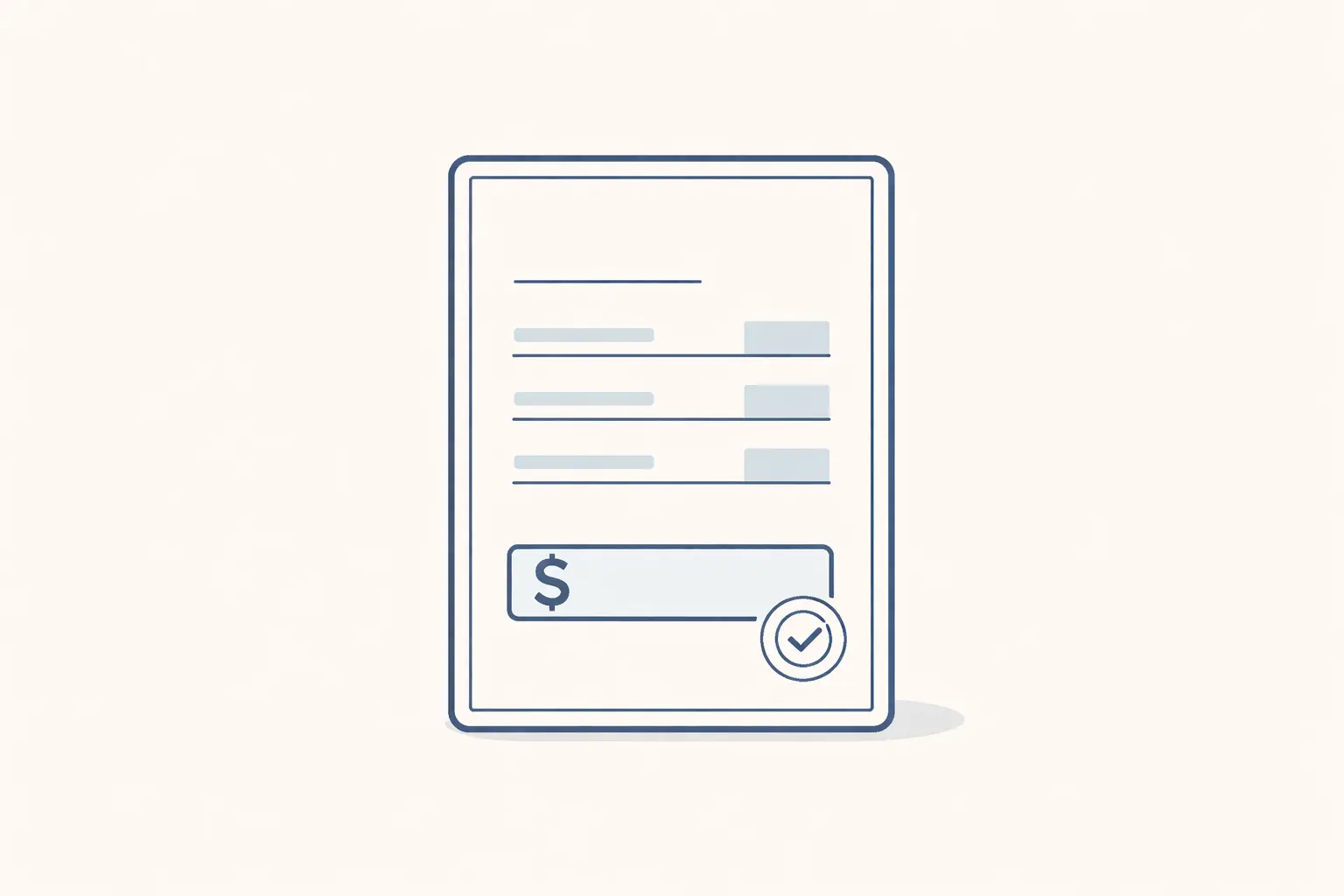
Invoice Preview
For official invoices, ensure GST registration and compliance with applicable tax laws.
The Power of Digital Invoicing
Digital invoicing is not just about printing better-looking receipts. It transforms how you manage your billing and finances:
Invoice storage: Every invoice is stored digitally and searchable. Need to find an invoice from 6 months ago? Search by customer name, date, or invoice number.
Multiple invoice types: Generate different formats for different purposes — a customer-facing bill with just the essential details, a detailed business invoice with complete tax breakdowns, or a combined format.
Payment tracking: Link payments to invoices. See instantly which invoices are paid, partially paid, or pending.
Partial payments: Many tailoring orders involve advance payments. Your invoice system should handle this — show the total amount, the advance received, and the balance due.
PDF generation: Generate professional PDF invoices that can be printed, emailed, or shared via WhatsApp.
QR codes: Some systems generate QR codes on invoices that customers can scan to track their order status online.
DD Tailors generates professional invoices automatically whenever you create an order. The system supports multiple invoice types — order invoices for your business records, customer bills with just the customer-facing details, and combined bills with everything in one document. All invoices are GST-ready with automatic tax calculations based on your configured tax groups. You can even add your shop logo, customize paper sizes, and include QR codes for order tracking.
The billing system handles partial payments, multiple payment methods per order (cash, card, UPI, bank transfer), and automatically tracks payment status across all orders. If a customer has paid an advance and you need to show the balance due, the invoice reflects it accurately.
Tips for Better Invoicing
Use Consistent Invoice Numbering
Follow a standard format: Shop code / Financial year / Running number. For example: DD/2025-26/001, DD/2025-26/002, and so on. This makes filing, searching, and tax reporting much easier.
Always Give a Receipt
Even for small orders, hand the customer a receipt. It protects both of you. If a customer claims their garment was included in the order but it was not, the invoice settles the question.
Record the Payment Method
Note whether the customer paid by cash, UPI, card, or other method. This helps with end-of-day reconciliation — your total cash in the register should match your cash invoices.
Handle Discounts Transparently
If you give a customer a discount, show it on the invoice. Display the original price, the discount amount, and the final price. This way, the customer sees the value they received, and your records accurately reflect your revenue.
Keep Copies for Your Records
Whether paper or digital, always maintain a copy of every invoice. Tax authorities can request these records for up to 6 years in some cases. Digital systems handle this automatically — every invoice is saved and accessible.
A Real-Life Example
A tailoring shop in Delhi switches from handwritten cash memos to a digital invoicing system. Here is what changes:
Before: The owner writes the total on a small slip, sometimes forgetting to note the items. End-of-day cash does not match the slips. At tax time, they spend days reconstructing records from incomplete notes.
After: Every order auto-generates a professional invoice with the shop logo, itemized garment list, GST breakdown, and payment details. The customer gets a clean PDF that they can keep. The owner can run a daily sales report in seconds. Tax filing becomes straightforward because all records are already organized.
The customers notice the change too. Several comment on how professional the bills look. A wedding planner who previously used a different tailor switches to this shop specifically because they can provide proper GST invoices — something the other tailor could not do.
Conclusion
Professional invoicing is one of the easiest improvements you can make to your tailoring business. It builds customer trust, prevents disputes, simplifies tax compliance, and gives you clear financial records.
Whether you start with a pre-printed invoice book or go straight to a digital system like DD Tailors, the important thing is to give every customer a proper bill for every transaction.
Your stitching makes the garment. Your invoice makes the business.
Find more practical tips for running a professional tailoring shop on the Duo Dev Technologies blog.
Category: Tailoring Business Management
Tags: tailoring invoice format, billing for tailors, GST invoicing tailoring, professional tailor bills, tailoring receipt generation, tailor billing software, tax compliance tailors, invoice management tailoring shop, payment tracking tailors, tailoring business finance