Why Your Tailoring Business Needs a Customer Loyalty Program
Learn how a simple loyalty program can increase repeat customers for your tailoring shop. Discover practical tips to reward loyal customers and grow your business with repeat orders.
Introduction
Think about your best customers — the ones who have been coming to your shop for years. They trust your work, they never haggle too much, and they bring their family and friends. How much of your annual revenue do these loyal customers make up? For most tailoring shops, the answer is significant — 40% to 60% of business comes from repeat customers.
Now think about how many new customers walk through your door, get one garment stitched, and never return. Not because your work was bad, but because they forgot about you. Or someone else was more convenient. Or they simply had no reason to choose you over any other tailor.
This is where a loyalty program comes in. Not a complicated corporate rewards scheme, but a simple system that gives your regular customers a reason to keep coming back — and a reason to choose your shop every single time.
What Is a Customer Loyalty Program?
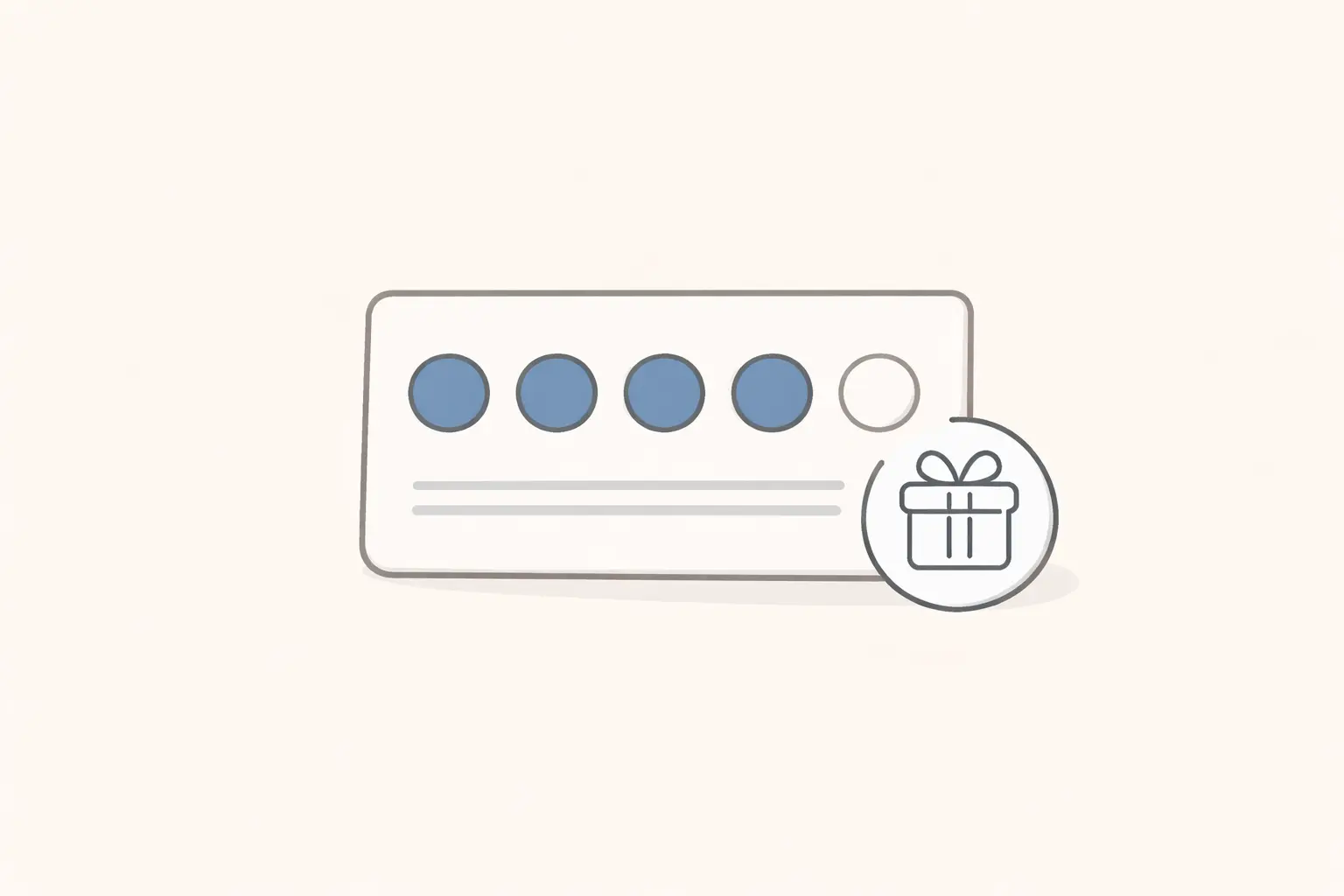
At its core, a loyalty program rewards customers for doing business with you. The concept is simple:
- Customer places an order → earns points or credit
- Points accumulate over multiple orders
- Customer redeems points for a discount on a future order
You have seen this model everywhere — at grocery stores, restaurants, coffee shops, and e-commerce sites. It works because it creates a positive loop: the more a customer buys, the more they earn, and the more reason they have to buy from you again instead of your competitor.
For a tailoring shop, a loyalty program does not need to be complicated. It can be as simple as: "For every ₹1,000 you spend, you earn ₹50 in credit toward your next order."
Why Loyalty Programs Work for Tailoring Businesses
Tailoring Is a Repeat Business
Unlike a one-time purchase, tailoring is something people need throughout the year — festival clothes, office wear, school uniforms, wedding outfits, alterations. A single customer might visit your shop 4 to 8 times a year. A loyalty program ensures they choose your shop every time.
Switching Is Easy
If a customer has no emotional or financial connection to your shop, they can easily switch to another tailor. A loyalty program creates a switching cost — the customer has earned points with you, and leaving means losing those points. This small incentive is surprisingly effective at preventing churn.
Word-of-Mouth Amplification
When a customer discovers they earned a discount on their next order, they feel good about it. They tell their friends and family: "My tailor gives me points every time I get clothes stitched. I got ₹200 off on my last order." This kind of organic, positive word-of-mouth is the best marketing a small business can get.
Higher Order Values
Customers who are close to earning a reward often spend a little more to reach the threshold. If they need ₹200 more in spending to earn a ₹100 discount, they might add an extra garment to the order. This naturally increases your average order value.
Better Customer Data
When you track loyalty points, you also track customer spending patterns. You learn who your top customers are, how often they visit, what they typically order, and how much they spend. This information helps you make better business decisions.
How to Set Up a Simple Loyalty Program
Step 1: Define Your Earning Rate
Decide how many points a customer earns for every rupee spent. Common rates for small businesses:
- 1 point per ₹10 spent — For every ₹1,000 order, the customer earns 100 points
- 1 point per ₹20 spent — More conservative, extends the time to earn rewards
Keep it simple. A complex earning structure with different rates for different services will confuse customers and create administrative headaches.
Step 2: Set the Redemption Value
Decide how much each point is worth when redeemed. For example:
- 1 point = ₹1 discount
- 10 points = ₹1 discount (if you give more points per transaction)
Using a 1-to-1 ratio (1 point = ₹1) is easiest to explain and understand.
Step 3: Set Minimum Thresholds
To prevent abuse and make the program sustainable:
- Minimum order to earn points: Only orders above ₹500 earn points (prevents gaming with tiny orders)
- Minimum points to redeem: Customers must accumulate at least 50 points before they can use them
- Maximum redemption per order: Cap the discount at 10% or 20% of the order value (so you do not give away too much on any single order)
Step 4: Decide on Point Expiry
Points should expire after a certain period — typically 6 to 12 months. This creates urgency for customers to return and prevents old, forgotten points from accumulating indefinitely.
Step 5: Communicate the Program
Tell every customer about your loyalty program. A simple sign at the counter, a mention when handing over the bill, or a note printed on the receipt is enough. The key message: "You earned X points today. Come back to earn more and get discounts."
Loyalty Points Simulator
A loyalty cost under 5% is ideal. Adjust points rate and reward threshold to balance retention vs margin.
Tracking Loyalty Points
The hardest part of a loyalty program for a small business is tracking it. You need to:
- Record points earned for every transaction
- Maintain a running balance for every customer
- Apply point deductions when redeemed
- Handle expiry of old points
- Show the balance when a customer asks
Doing this manually in a register works for the first 20 or 30 customers, but it becomes unmanageable as your customer base grows.
This is where digital tools shine. A tailoring management system with built-in loyalty tracking automatically handles point calculations, balance updates, and expiry tracking. Neither you nor your customer needs to remember anything — the system does it all.
DD Tailors includes a complete customer credit and loyalty points system. You configure the earning rate, minimum order threshold, maximum earn and redeem limits, expiry period, and currency-per-point conversion — all through simple settings. When a customer places an order, the system automatically calculates and adds their earned points. When they want to redeem, the system shows their available balance and applies the discount. Every transaction is recorded in a detailed ledger, so there is complete transparency.
The system even handles edge cases like credit expiry notifications and maximum cap per order, so you never have to worry about the program costing you more than planned.
Real Examples of Loyalty Programs for Tailors
Example 1: The Neighborhood Tailor
A small tailoring shop offers 1 point per ₹10 spent. Points are worth ₹1 each. Minimum order to earn: ₹300. Minimum points to redeem: 30 points. Expiry: 12 months.
A customer gets a shirt stitched for ₹600. They earn 60 points. Over the next few months, they get pants (₹500 = 50 points) and a kurta (₹800 = 80 points). Now they have 190 points.
On their next order, they redeem 100 points for a ₹100 discount. They still have 90 points remaining. This small saving creates goodwill and guarantees they come back.
Example 2: The Boutique Tailor
A higher-end boutique offers 1 point per ₹20 spent but gives points worth ₹2 each. They set a minimum order of ₹2,000 to earn points.
A customer orders a designer saree blouse for ₹3,000 and earns 150 points. On their next order of ₹5,000, they earn 250 more points (total: 400). When they redeem, 400 points = ₹800 discount on a ₹6,000 lehenga order. The customer feels rewarded, and the boutique has locked in three consecutive high-value orders.
Benefits Beyond Money
A loyalty program is not just about discounts. It sends a message to your customers:
"I value your business." In a world of impersonal transactions, knowing that your tailor recognizes and rewards your loyalty creates an emotional connection.
"I remember you." When you can show a customer their points balance, it implies you have their history on file — their preferences, their measurements, their past orders. That level of personalized service sets you apart.
"I want you to come back." Every point earned is an invitation to return. It is a gentle, non-pushy way of saying, "We would love to serve you again."
Getting Started
You do not need to overthink this. Start with a simple structure:
- Pick an earning rate (e.g., 1 point per ₹10 spent)
- Set the redemption value (e.g., 1 point = ₹1)
- Set a minimum order and minimum redemption threshold
- Start tracking — manually for now, digitally when ready
If you want to skip the manual phase entirely, DD Tailors lets you set up and launch a loyalty program in minutes. The system handles all tracking, calculations, and reporting automatically, so you can focus on what you do best — creating perfectly fitted garments.
Conclusion
A customer loyalty program is one of the simplest and most effective ways to grow your tailoring business. It does not require a big budget, a marketing team, or complex technology. It just requires a consistent system that rewards your customers for choosing you.
Your regular customers already trust your work. Give them one more reason to stay — and to bring their friends and family with them.
Start your loyalty program today and watch your repeat business grow. For more business growth strategies for tailoring shops, visit the Duo Dev Technologies blog.
Category: Tailoring Business Management
Tags: customer loyalty program tailors, tailoring customer retention, repeat customers tailoring, tailor reward points, loyalty system tailoring business, customer engagement tailors, tailoring shop growth, customer credit system, tailoring business marketing, customer relationship management tailors